
Calcination of Hydromagnesite in a Rotary Kiln
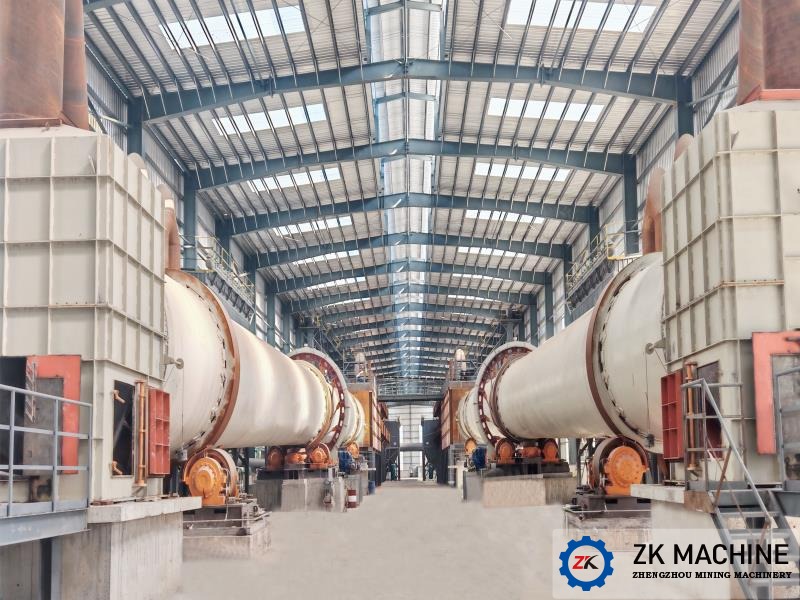
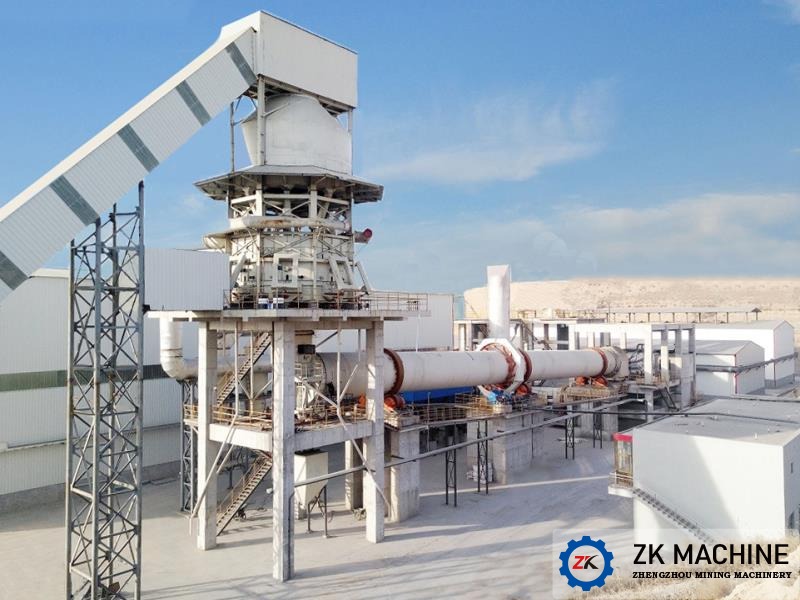
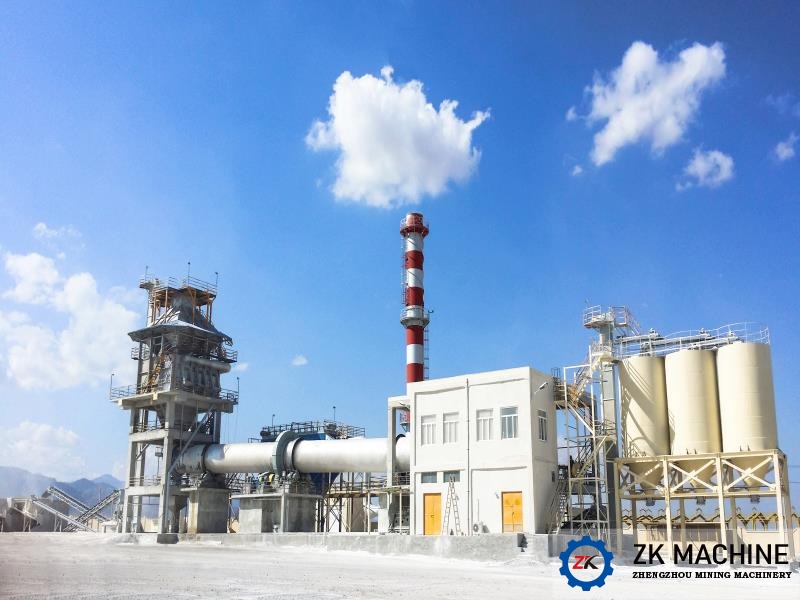
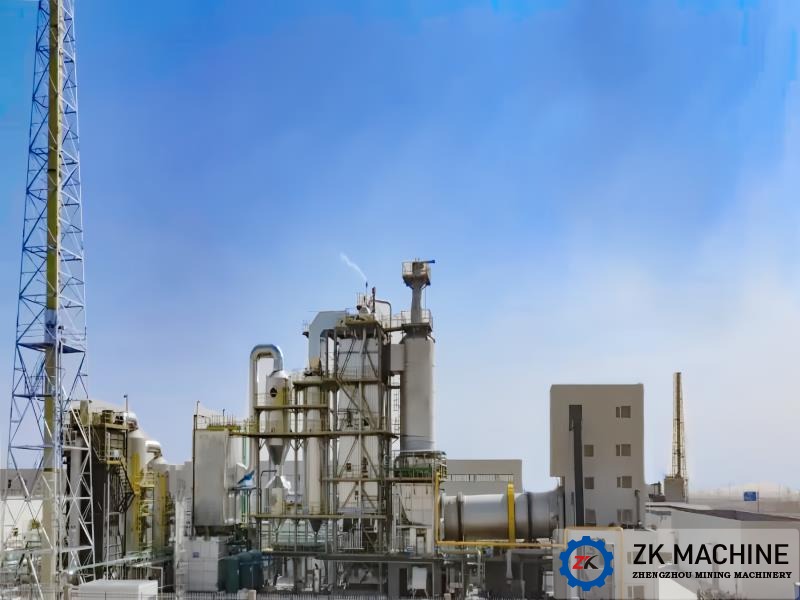
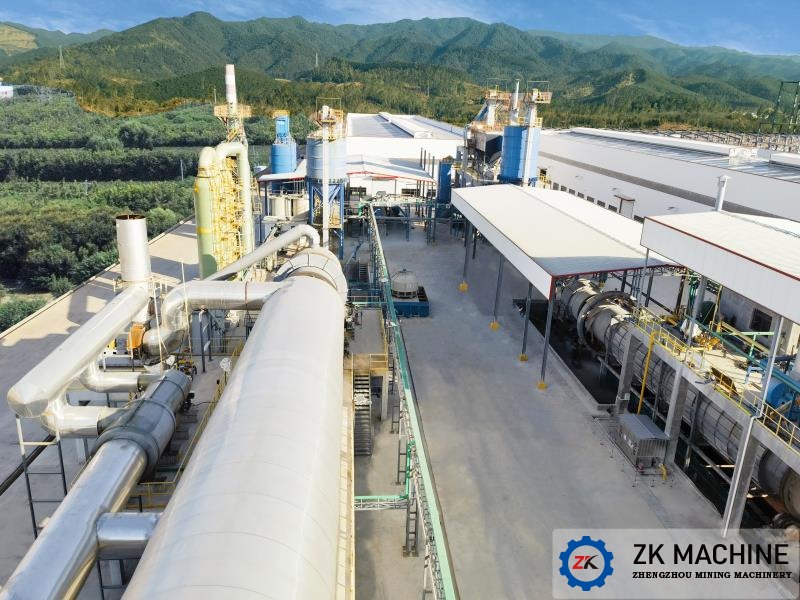
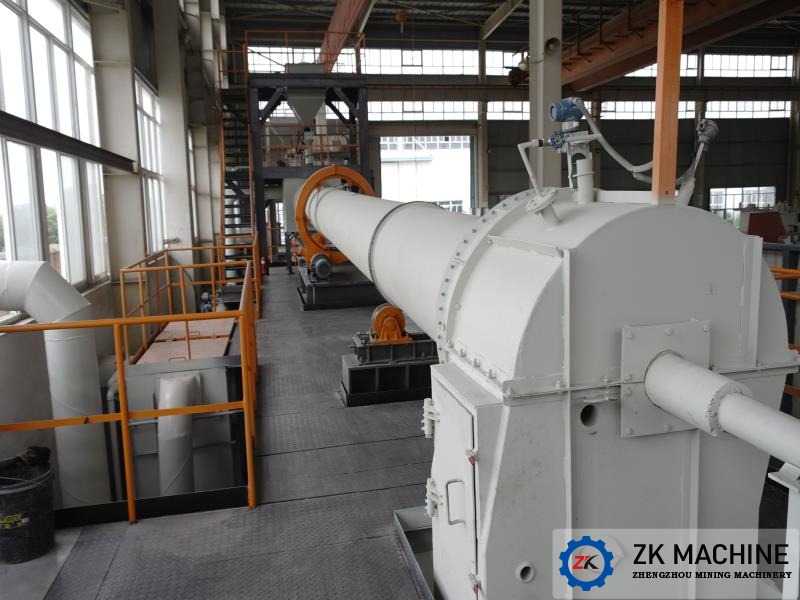
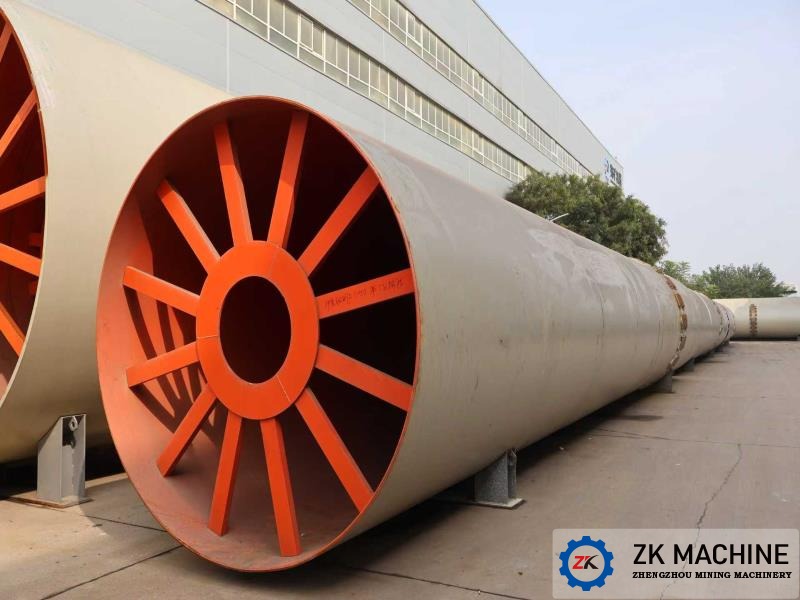
Hydromagnesite (brucite) calcination in a rotary kiln primarily yields light-burned magnesia. The core process comprises raw material pretreatment → sealed feeding → segmented calcination in the rotary kiln → rapid cooling → grinding and classification → finished product packaging, with integrated waste-heat recovery and environmental control systems to ensure compliance with indices and product reactivity.
Ⅰ. Full-Process Technology
1. Raw Material Pretreatment Section (Control impurities, uniform particle size, reduce moisture)
Coarse crushing → fine crushing → screening: Raw ore is coarsely crushed by a jaw crusher to 30–50 mm, then shaped and further crushed to 10–30 mm by a hammer crusher; vibration screening ensures uniform particle size.
Impurity removal and purification: Remove red veins and waste rock, and wash with water to remove clay; for high-silica/iron feedstock, magnetic separation is applied to remove iron and enhance purity; alternatively, wet ball milling combined with carbonation can be used for impurity removal.
2. Sealed Feeding Section (Prevent air leakage, ensure stable metering)
Belt-scale conveyor → sealed screw feeder → kiln head sealed hopper, achieving slightly positive-pressure feeding to prevent cold air ingress, which could disrupt the temperature field inside the kiln.
3. Rotary Kiln Calcination Section (Core section, five-zone temperature control)
Section | Temperature range | Key Role | Critical Control Points |
Preheating Section | 200-400℃ | Remove free water and vent adsorbed gas | Heating rate ≤ 10°C/min, to prevent cracking |
Pre-decomposition Section | 600-700℃ | Mg(OH)₂ begins to decompose | Releases H₂O, primarily through decomposition for energy storage |
Main Section | 700-780℃ | Main reaction: Mg (OH)2→MgO+H2O↑ | Temperature accuracy of ±10°C ensures complete decomposition |
Homogenization and Stabilization Section | 780-850℃ | Grain growth, stabilization activity | Stay for at least 15 minutes to prevent overheating |
Pre-cooling Section | 500-600℃ | Cooling, preserving activity | Rapid cooling to inhibit grain growth |
Total residence time: 60–90 min (matched to particle size).
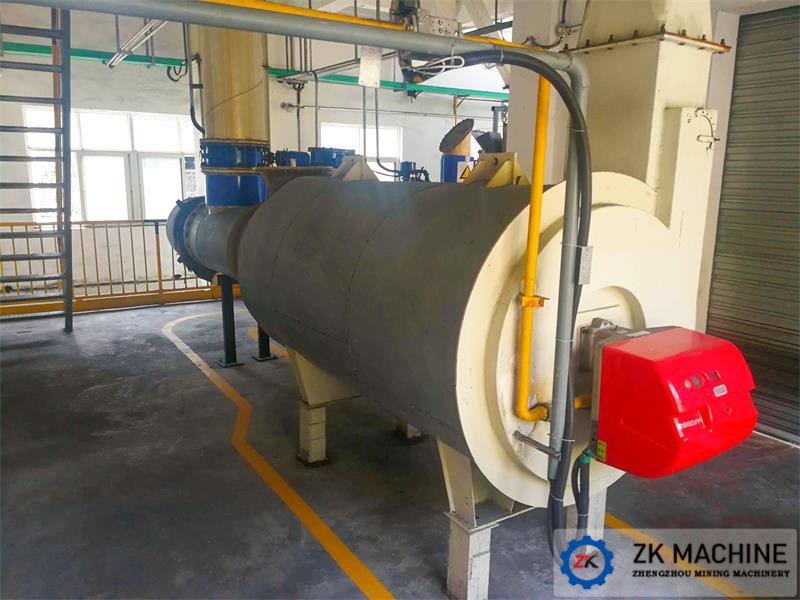
Heating method: direct heating with natural gas/coal gas.
4. Rapid cooling section (activation locking)
Discharge from kiln head → single-cylinder cooler; rapid cooling below 100℃ to prevent activity loss and pulverization.
Waste-heat recovery: cooling hot air is recycled for preheating in calcination, saving 15%–20% energy.
5. Post-processing and packaging (quality enhancement)
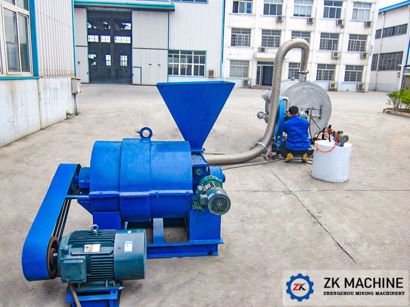
Milling and classification: ball mill / vertical mill to 325 mesh–5 μm (based on customer particle-size requirements); air classification controls particle size D50.
Inspection and packaging: measure MgO content, activity, and whiteness; pack in moisture-proof lined bags to prevent moisture absorption.
II. Key process parameters and control points:
Feed particle size: powder 100–325 mesh, lump 10–30 mm.
Decomposition temperature: 700–780℃ (core range for light calcination).
Atmosphere: Slightly oxidizing, O₂ ≥ 5%, to avoid reduction causing iron contamination.
Kiln speed and slope: Rotational speed 1–3 r/min, slope 2%–4%, matched to material residence time.
III. Environmental protection and compliance highlights:
Dust control: Baghouse dust collectors at kiln head and kiln tail, emission ≤ 30 mg/m³.
Desulfurization and denitrification: Gas-fired desulfurization tower + SCR, SO₂/NOₓ compliant; natural gas does not require treatment.
Noise: Soundproof enclosures installed on equipment, boundary noise ≤ 60 dB(A).
IV. Common issues and countermeasures
Problem | Reason | Strategy |
Forming rings/Forming a crust | Uneven particle size, high moisture content, and excessive temperature | Uniform particle size, drying, temperature control ≤850°C, kiln cleaning |
Insufficient activity | Temperature too low, insufficient dwell time | Heat to 750–780°C and extend the dwell time |
Over-firing, powdering | Temperature too high, slow cooling | Temperature control, rapid cooling |