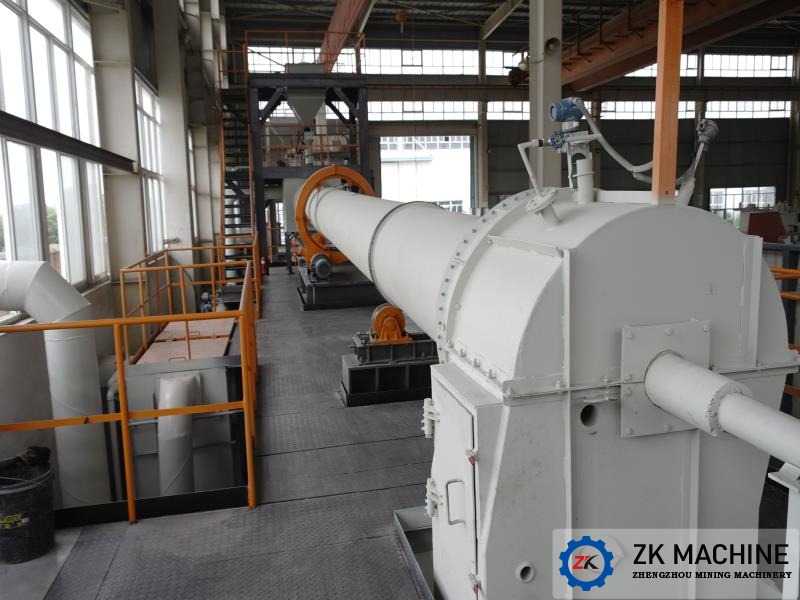

Acidification Kiln
1. Introduction to Acidification Kiln
Acidification kilns, as important industrial equipment, play a crucial role in the smelting of rare metals, especially in the production of lithium products. Through a series of complex chemical reactions and physical processing steps, they successfully extract lithium from lithium-bearing ores and produce high-value lithium products such as lithium carbonate. This article will comprehensively and deeply explore the working principle, equipment structure, and specific applications of acidification kilns in different scenarios, aiming to provide comprehensive and detailed reference and guidance for practitioners in related industries.
2. Working Principle of Acidification Kilns
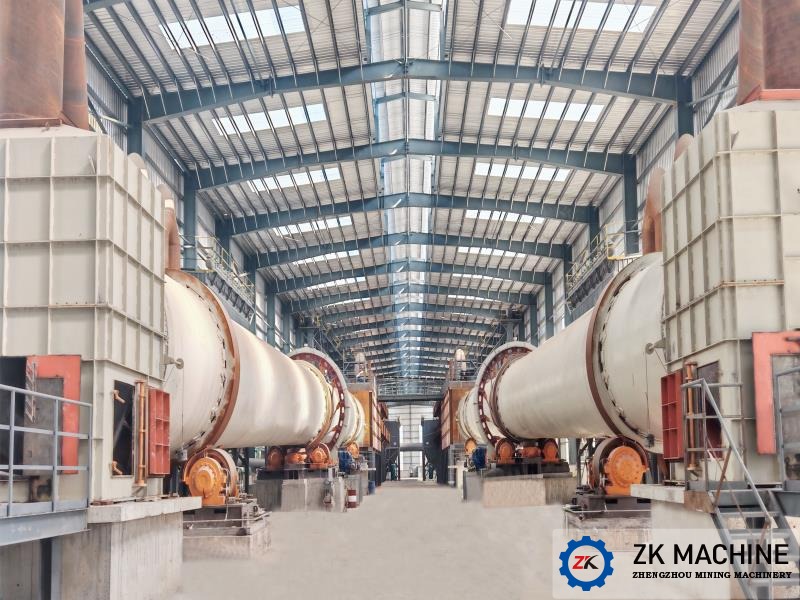
2.1 Material Tumbling and Mixing: Acidification kilns typically consist of a long cylindrical rotating cylinder lined with refractory material to withstand high temperatures. After the material is added through the feed inlet, it continuously tumbles and mixes as the kiln rotates. This tumbling and mixing effect not only improves reaction efficiency but also helps control the uniformity and consistency of the reaction process.
2.2 Chemical Reaction: In the acidification rotary kiln, materials come into contact with specific acidic gases or liquids at high temperatures, resulting in an acidification reaction. This reaction can alter the chemical properties of the materials to meet specific industrial requirements. Specifically, during the mixing and roasting process, lithium ore raw materials are mixed with concentrated sulfuric acid and other substances in a certain proportion and then subjected to closed-loop acidification roasting at high temperatures. During this process, hydrogen ions in the acid replace lithium ions in the ore, forming water-soluble lithium sulfate. By controlling reaction conditions such as temperature, pressure, and reaction time, the acidification process can be precisely controlled to obtain the desired product properties.
2.3 Heat Transfer and Control: The heating system of the acidification kiln introduces hot air into the cylinder through a hot air duct system to achieve uniform heating of the materials. To ensure external heating efficiency, a special air duct is installed in the jacket to ensure the thermal efficiency of the hot air and precise temperature control. This design not only improves the thermal efficiency of the equipment but also ensures the uniformity and stability of the materials during the heating process.
2.4 Tail Gas Treatment and Environmental Requirements: During the operation of the acidification kiln, tail gas containing acidic gases (such as sulfur dioxide and hydrogen chloride) is generated. To meet environmental protection requirements, desulfurization and denitrification equipment is typically used to treat the tail gas. These devices separate dust particles from the tail gas through the action of rotating airflow and centrifugal force, thereby achieving the purpose of purifying the tail gas.
3. Equipment Structure of the Acidification Kiln
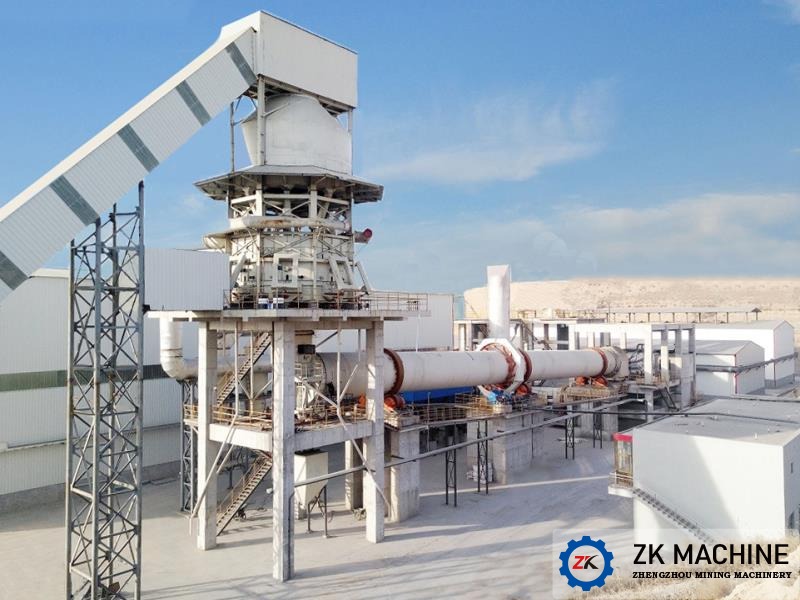
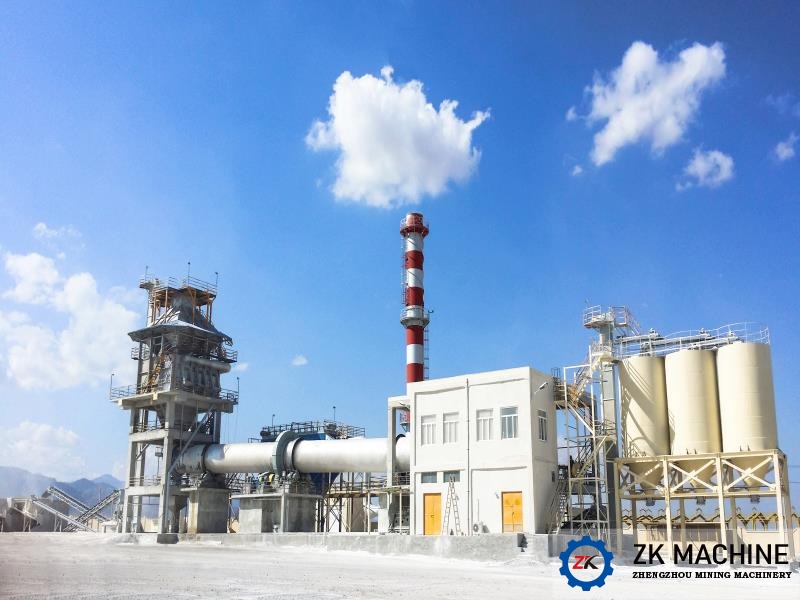
3.1 Cylinder: The cylinder is the main part of the acidification kiln, usually made of high-quality carbon steel plate by rolling and welding to ensure that it can withstand the high temperature and high pressure working environment. The inside of the cylinder is lined with refractory material to improve the high temperature resistance of the equipment. The cylinder is supported on the support device by tires, and mechanical or hydraulic guide rollers are installed on one or more of the support devices to control the axial movement of the cylinder. In addition, special anti-sticking devices are installed on the outer and inner walls of the cylinder to ensure the smooth flow of materials.
3.2 Transmission Device: The transmission device is the key component that drives the rotation of the cylinder. It uses a gear ring located in the middle of the cylinder to rotate the cylinder at the required speed. To ensure the stability and reliability of the equipment, the transmission device usually adopts DC or AC variable frequency speed control technology to adapt to different operating conditions. Larger kilns also have auxiliary transmission devices to rotate the kiln body at very low speeds to meet installation and maintenance needs.
3.3 Support Roller and Thrust Roller Support Devices: Support roller and thrust roller support devices are used to support the cylinder and control its axial movement. These devices usually adopt rolling or sliding types to adapt to different working environments and load requirements. Through reasonable layout and design, the stability and reliability of the cylinder during rotation can be ensured.
3.4 Kiln Tail Seal: The kiln tail seal device is used to prevent cold air from entering and flue gas and dust from overflowing from the cylinder. This device plays a crucial role in the operation of the acidification kiln because it not only relates to the thermal efficiency of the equipment but also directly affects the quality and output of the product. Therefore, in the design and manufacturing process, spring-plate stacked flexible seals or double-layer spring-plate seals with added insulation layers are usually used to improve the reliability and service life of the seal.
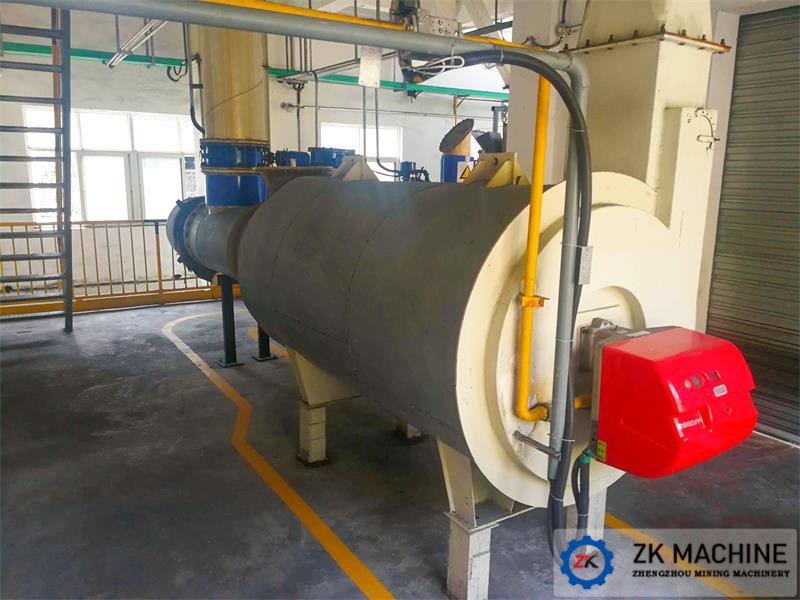
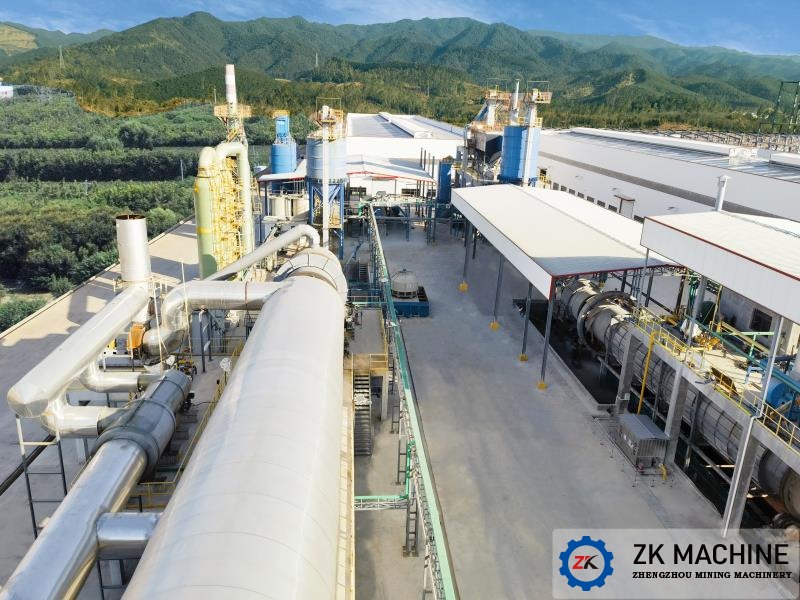
3.5 Outer Jacket and Hot Air Duct System: The outer jacket is a heating device located around the perimeter of the kiln shell. To ensure efficient external heating, a special air duct is installed inside the jacket to guarantee the thermal efficiency and precise temperature control of the hot air. The hot air duct system is used to introduce hot air generated by the combustion system into the kiln shell to achieve uniform heating of the material. This system typically consists of hot air ducts, valves, and regulating devices. By precisely controlling the flow rate and temperature of the hot air, the uniformity and stability of the material during the heating process can be ensured.
3.6 Combustion System: The combustion system provides the heat required for acid roasting. It typically consists of a fuel supply device, an ignition device, and a combustion chamber. By precisely controlling the fuel supply and the temperature of the combustion chamber, the uniformity and stability of the material during the heating process can be ensured.
3.7 Kiln Head Hood and Discharge Device: The kiln head hood is a protective device located at the discharge end of the kiln shell. It not only prevents material from splashing out of the kiln during discharge but also prevents cold air from entering the kiln shell. The discharge device is used to discharge the roasted clinker from the kiln shell.
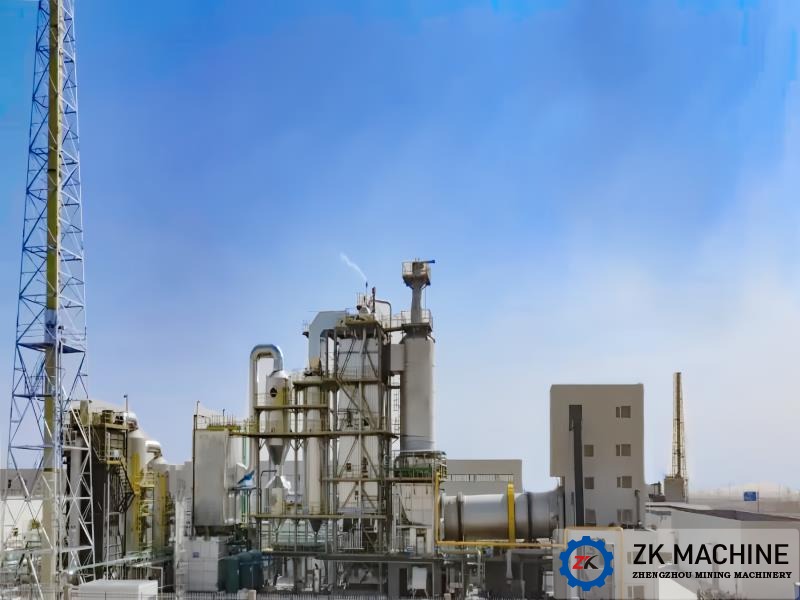
3.8 Desulfurization and Denitrification Equipment: Desulfurization and denitrification equipment is used to treat the exhaust gas generated during the operation of acidification kilns. These devices separate dust particles from the exhaust gas through the action of rotating airflow and centrifugal force, thereby purifying the exhaust gas. Desulfurization and denitrification equipment typically consists of a main body, volute, core tube, and sealed dust collection device, and can be designed differently depending on the installation location and requirements.
4. Main Application Scenarios of Acidification Kilns
4.1 Spodumene Acidification Roasting: Spodumene is an important lithium ore resource, and its acidification roasting process is usually carried out in an acidification kiln. In this process, spodumene raw materials are mixed with concentrated sulfuric acid and other substances in a certain proportion and subjected to closed acidification roasting at high temperature. Through this chemical reaction, hydrogen ions in the acid replace lithium ions in the ore, forming water-soluble lithium sulfate. Subsequently, the roasted clinker undergoes cooling slurrying, leaching, impurity removal, and lithium precipitation steps to finally obtain lithium products such as lithium carbonate. The acidification kiln not only provides the necessary heating conditions in this process but also ensures the uniformity and stability of the material, thereby improving product quality and yield.
4.2 Acid Roasting of Lithium Phosphate Aluminate: Lithium phosphate aluminate is another important lithium ore resource, and its acid roasting process can also be carried out using an acid roasting kiln. Similar to spodumene, the acid roasting process of lithium phosphate aluminate involves steps such as mixing, roasting, leaching, impurity removal, and lithium precipitation. By precisely controlling parameters such as temperature, time, and acidity during the acid roasting process, it can be ensured that lithium ions in the lithium phosphate aluminate are effectively displaced, forming water-soluble lithium sulfate. Subsequently, after further processing steps, lithium products such as lithium carbonate are finally obtained. The acid roasting kiln also plays a crucial role in this process, ensuring uniform heating and stable reaction of the materials.
4.3 Acid Roasting of Other Rare Ores: In addition to spodumene and lithium phosphate aluminate, acid roasting kilns can also be applied to the acid roasting process of other rare metal ores. For example, in the acid roasting reaction of tantalum-niobium ore, the acid roasting kiln also plays an important role. By precisely controlling parameters such as temperature, time, and acidity during the acidification reaction process, it is possible to ensure that useful components in tantalum-niobium ore are effectively extracted and formed into economically valuable chemical products.