
Ball Mill Selection Guide: Unlock Efficient Grinding Solutions
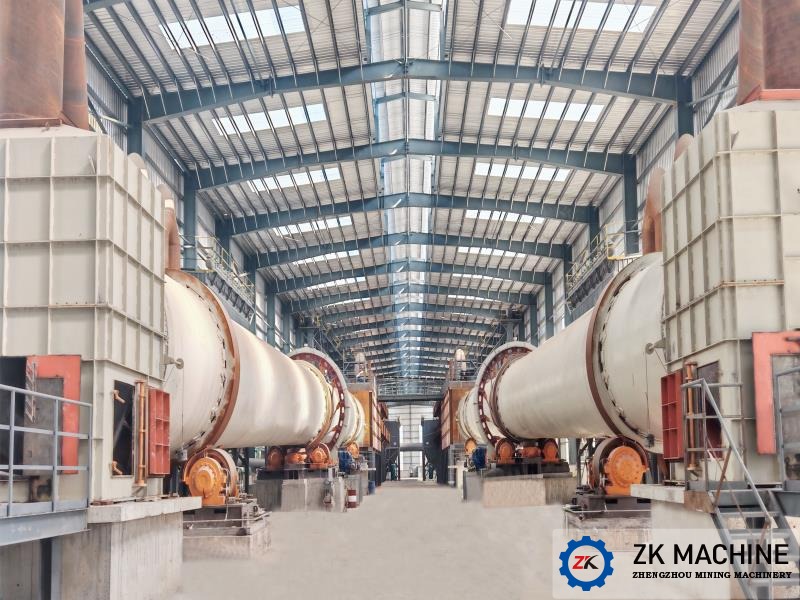
In industrial production processes such as mining beneficiation, building materials powder processing, chemical raw materials, and metallurgical grinding, the ball mill is the core equipment for material crushing and grinding. Equipment selection directly determines the production line's capacity, final product particle size, energy consumption costs, and environmental compliance requirements.
Different combinations suit different materials, particle size requirements, and production scenarios. Proper selection enables the trinity of quality improvement, efficiency enhancement, and cost reduction. ZK compares the core differences, advantages, disadvantages, and application scenarios of various ball mills to help businesses easily lock in the most suitable equipment.
I. Wet Ball Mill VS Dry Ball Mill: Process Mode Determines Production Foundation
The core difference between dry and wet ball mills lies in the grinding medium and operating environment. The two differ significantly in material suitability, grinding efficiency, environmental costs, and applicable industries. This is the fundamental prerequisite for production line selection.
1. Wet Ball Mill: Refined Wet Grinding, the Preferred Choice in Beneficiation
The wet ball mill uses water or a specialized grinding liquid as the medium. Materials undergo impact, grinding, and refinement through the grinding media in a liquid environment. It is currently the mainstream process in the mining beneficiation and precious metal purification industries. During operation, the liquid envelops the material, effectively buffering the impact of the grinding media while also dissipating the heat and fine dust generated during grinding.
Core Advantages: Uniform grinding fineness, capable of liberating useful minerals from impurities; dust-free operation throughout the process, ensuring a clean production environment and environmental compliance; excellent heat dissipation, preventing material overheating and degradation, resulting in stable product quality.
Relative Disadvantages: The entire process requires supporting equipment for slurry transportation, dewatering, sedimentation, and wastewater treatment, leading to high initial supporting costs; long-term wet operation can slightly accelerate the corrosion of the mill shell and liners, requiring regular maintenance.
Core Application Scenarios: Suitable for non-ferrous metal beneficiation such as gold, silver, copper, iron, and lead-zinc; wet purification of non-metallic minerals; and fine grinding of quartz sand, kaolin, and other materials with high purity and fineness requirements.
2. Dry Ball Mill: Waterless Dry Grinding, Specialized for Dry Bulk Production
The dry ball mill operates without water, relying on impact and friction between materials and between materials and grinding media. Paired with dust collection equipment, it forms a closed production loop with a streamlined process.
Core Advantages: No need for a water treatment system, resulting in a simple production line layout, convenient operation and maintenance, and lower initial investment; the discharged material is dry and ready for subsequent processing.
Relative Disadvantages:** The grinding process generates dust, requiring effective dust collection equipment; the uniformity of the final particle size is slightly inferior to that of the wet process.
Core Application Scenarios: Widely used for grinding dry powder materials in building materials and chemicals, such as cement, coal powder, lime, talc, and calcium carbonate; also used for ore pre-grinding, dry powder preparation, and refractory material processing.
II. Grate Discharge VS Overflow Ball Mill: Discharge Structure Determines Grinding Precision and Capacity
Based on the dry and wet grinding processes, the structural differences between the grate discharge and overflow types directly determine the equipment's discharge speed, capacity, and final product particle size. This distinction is key to differentiating between coarse and fine grinding operations, with configurations varying according to the grinding process.
1. Grate Discharge Ball Mill: Forced Discharge, the Choice for High-Capacity Coarse Grinding
The grate discharge ball mill is equipped with a specialized grate plate and screen plate at the discharge end. It relies on mechanical forced discharge to expel the material. The material's residence time in the mill is short, allowing qualified material to be discharged quickly and effectively preventing over-grinding.
Core Performance Highlights: Outstanding capacity advantages, suitable for large-scale production; uniform and relatively coarse discharge particle size, no material accumulation or blockage issues, excellent operational stability.
Application in Dry/Wet Processes: In wet conditions, it can serve as the primary coarse grinding stage in mining beneficiation, forming a closed-circuit system with spiral classifiers and hydrocyclones to effectively achieve initial ore liberation. In dry conditions, it can be used for ore pre-grinding and coarse processing of bulk building material raw materials, quickly completing the pre-refinement of large particles.
2. Overflow Ball Mill: Natural Overflow, Specialized for High-Precision Fine Grinding
The overflow ball mill has no grate plate structure. It discharges material through natural overflow, relying on the slurry level difference within the mill shell. The material has a longer residence time in the mill, allowing for better refinement through impact and friction.
Core Performance Highlights: Extremely simple structure with fewer components, easy maintenance and repair, and an exceptionally low failure rate; achieves extremely high grinding fineness, capable of stably achieving a high proportion of -200 mesh fines, meeting the demands of high-end powder and fine beneficiation; suitable for refined, low-load continuous operations.
Application in Dry/Wet Processes: In wet conditions, it is primarily used for secondary fine grinding, tailings re-grinding, and concentrate purification. It is the core equipment for high-end beneficiation and fine processing of non-metallic minerals, significantly improving mineral recovery rates and final product purity.
III. Combined Selection Reference to Match Production Needs
For quick selection, here is a summary of the core logic for matching processes and machine types to avoid common selection mistakes:
1. Wet + Grate Discharge: Standard configuration for high-capacity coarse grinding, suitable for primary grinding of raw ore in mining and high-capacity wet pretreatment, prioritizing output and avoiding over-grinding.
2. Wet + Overflow: The choice for high-precision fine grinding, suitable for secondary concentrate grinding in beneficiation, deep mineral purification, and high-end wet powder processing, focusing on high fineness and high recovery rates.
3. Dry + Grate Discharge: Specialized for dry coarse processing, suitable for pre-grinding of coal, ore, and bulk building materials, ideal for large-scale dry bulk material treatment.
IV. Focused Selection Empowers Production, Efficient Equipment Aids Cost Reduction and Efficiency Improvement
In industrial grinding production, there is no "one-size-fits-all" ball mill; only the right selection scheme. Blindly following trends can lead to insufficient capacity, substandard product quality, energy waste, and frequent equipment failures, all of which significantly increase production costs.
High-quality ball mill equipment, leveraging proven dry/wet process adaptation technology and optimized structural design, balances four core advantages: high capacity, high precision, low energy consumption, and easy maintenance. For coarse grinding scenarios, the grate discharge structure is used to increase capacity and prevent over-grinding. For fine grinding scenarios, the overflow structure is employed to ensure uniform and stable product fineness. With comprehensive coverage of both dry and wet processes, it meets the grinding needs of all industries, including mining, building materials, chemicals, metallurgy, and new materials.
Furthermore, the equipment features thickened wear-resistant liners and optimized high-strength steel ball ratios, ensuring robustness and durability, significantly reducing equipment wear and maintenance costs. Customized models and supporting solutions can be tailored based on production line capacity, material characteristics, and product standards, truly achieving "fit-for-purpose" and efficient production. This helps businesses improve production efficiency and gain a competitive edge from the ground up.
In a nutshell: Choose grate discharge for coarse grinding and mass production; choose overflow for fine grinding and purification; choose dry grinding for moisture-sensitive dry powders; choose wet grinding for beneficiation and purification. Selecting the right matching machine type and process is the key to efficient, stable, and low-cost operation of your grinding production line.